

How Long Do Retaining Walls Last?
How long do retaining walls last? It depends on wall type, drainage, soil, and build quality; timber may last decades less than well-built concrete and stone.
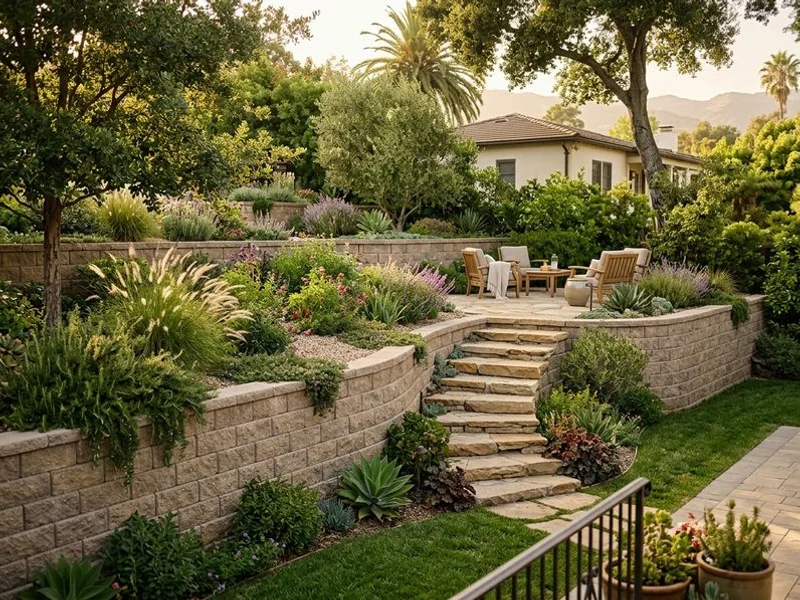
A well-built retaining wall can remain serviceable for many decades, and some systems are engineered for close to a century. A poorly built one can start failing within its first decade. The honest answer is that lifespan varies substantially by wall material, structural system, drainage, soil conditions, construction quality, and maintenance, so any single number without that context is misleading.
As a broad expectation: engineered concrete and segmental systems are commonly designed for service lives measured in many decades, natural stone can last for generations, and timber generally offers the shortest service life of the group. In US highway practice, the Federal Highway Administration requires permanent mechanically stabilized earth walls to be designed for a minimum service life of 75 years, a useful benchmark for properly engineered earth-retaining construction. Most residential retaining walls fall somewhere between those extremes.
Typical Lifespan by Wall Type
The ranges below are general expectations, not guarantees; conditions and construction quality matter as much as material.
| Retaining wall type | Typical lifespan / general expectation | Main factors affecting lifespan |
|---|---|---|
| Poured reinforced concrete | Many decades; engineered structures are commonly designed for 50-year to 100-year service lives | Mix and cover, cracking, water control, corrosion protection |
| Segmental concrete block (engineered) | Many decades; FHWA design practice calls for a 75-year minimum service life for permanent systems | Base preparation, geogrid reinforcement, water relief, movement |
| Natural stone | Can remain serviceable for generations when well built | Foundation, construction method, mortar condition where used |
| Timber | Commonly the shortest service life; roughly 10 to 25 years is a frequent residential experience, though treated ground-contact lumber can last much longer in testing | Moisture, rot, insects, preservative treatment |
| Gabion | Stone fill is extremely durable; service life is governed mainly by the wire mesh and its coating | Mesh coating, water exposure, abrasion, debris impact |
Lifespan by Material and Wall Type
Poured and Reinforced Concrete Walls
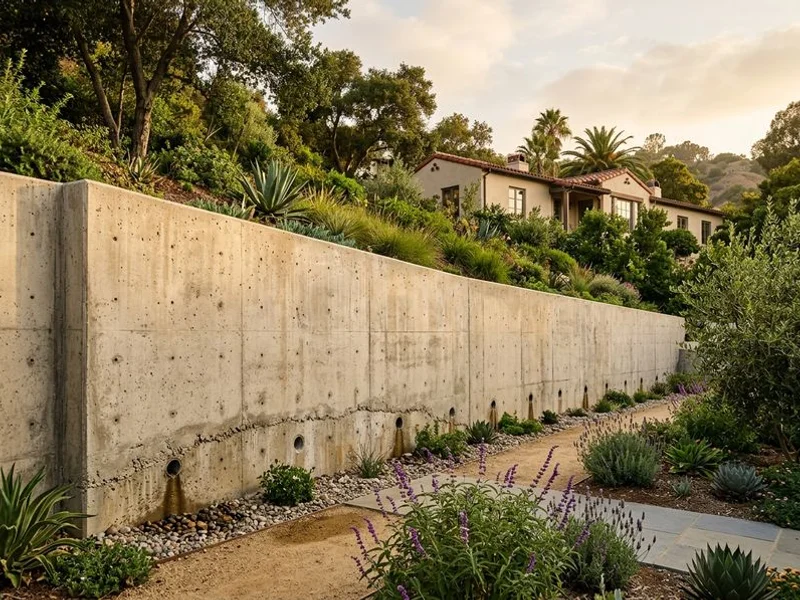
Concrete is one of the most durable building materials in common use, which is why a properly designed and built concrete retaining structure can remain serviceable for many decades. Cracking lets water reach the reinforcing steel, and corroding steel expands, spalling the concrete around it and accelerating the damage. Good concrete quality, adequate cover over the reinforcement, and sound water control are what allow the material’s potential durability to become actual longevity. A cantilever wall in reinforced concrete, where stem and footing work as one engineered unit, shows how much design contributes: the same material poured thinner or over poor ground lives a much shorter life.
Segmental Concrete Block Walls
Modern segmental retaining systems pair manufactured concrete units with compacted backfill and, where the design requires it, geogrid reinforcement locked into the retained soil. When properly engineered and installed, these systems are genuine long-life structures: the 75-year minimum design service life in federal highway practice applies to this family of reinforced-soil construction. Longevity at the residential scale depends on the same variables highway engineers worry about: base preparation, reinforcement where required, water relief behind the face, and freedom from unexpected movement. A segmental wall built casually, without those elements, should not be expected to match that service life.
Natural Stone Walls
Stone itself barely figures in the lifespan question; dense natural stone can outlast nearly everything around it. What determines how long a stone wall lasts is the system: foundation, construction method, mortar condition where used, and water control behind the face. Well-built stone walls remain serviceable for generations, while a poorly founded one can lean, bulge, or shed stones within a fraction of that time while the stone itself remains fine.
Timber Walls
Timber retaining walls generally have a shorter service life than masonry or concrete systems, because wood in ground contact faces constant moisture, fungal decay, and insect attack. Roughly 10 to 25 years is a frequent residential experience, with moisture management making most of the difference inside that range. Treatment level matters: in long-term USDA Forest Products Laboratory testing, lumber treated to standard ground-contact retentions showed no failures after 39 to 45 years at a severe exposure site, while less thoroughly treated material performed far worse. Even so, timber remains the material most likely to need replacement within a homeowner’s tenure.
Gabion Walls
Gabion walls confine stone fill inside wire mesh baskets. The stone does not rot or degrade on any residential timescale, so the wire governs the wall’s service life: its coating, the aggressiveness of the water and ground chemistry around it, and damage from abrasion or debris. Highway specifications assume long working lives but require appropriate zinc-alloy and polymer coatings to achieve them. The fill is nearly permanent; the basket decides the calendar.
Why Retaining Wall Lifespan Varies So Much
Two retaining walls of identical material can have dramatically different service lives, and the difference almost always traces to a short list of causes. Drainage sits at the top: trapped water builds hydrostatic pressure that the wall was never designed to carry, saturates the backfill, and in some climates drives freeze and thaw damage. Inadequate base or footing preparation lets the structure settle unevenly. Soil movement adds new loads. Insufficient reinforcement leaves the wall resisting forces it cannot carry, and excessive loads above it compound the problem. Corrosion of embedded reinforcement and timber decay attack specific materials from inside. Neglected maintenance lets small, cheap problems become structural ones.
Drainage and Water
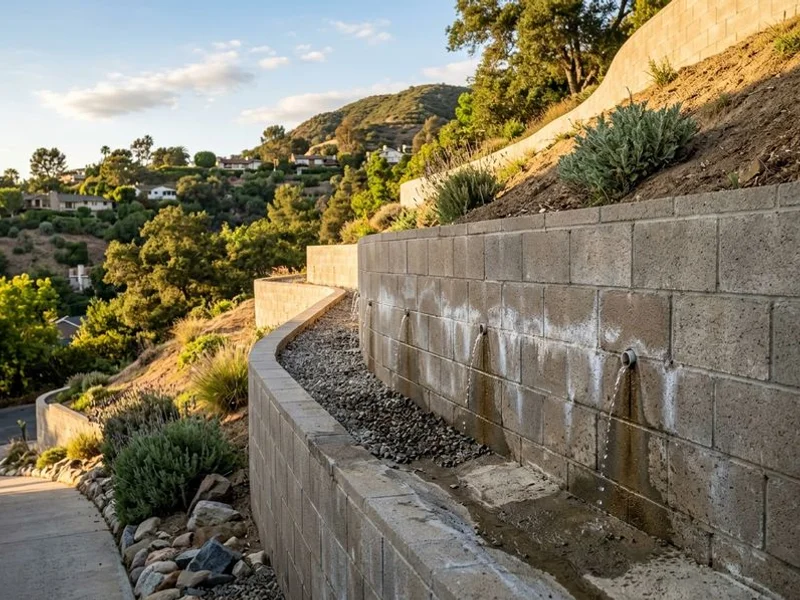
If one factor deserves emphasis, it is drainage. Water is the most common accelerant of retaining wall deterioration across every material. It raises pressure behind the wall, softens supporting ground, carries fines out of the backfill, corrodes wire and reinforcement, and rots timber. A wall with functioning drainage sheds that burden; the same wall without it ages in dog years. Keeping water moving through the structure as designed is the single most effective longevity measure available, which is why the condition of drains and weep paths matters over the life of the wall.
Soil, Slope, and Structural Loads
What the wall retains and what it stands on frame its entire service life. Expansive soil swells when wet and shrinks when dry, cycling the wall season after season. Loose or poorly compacted fill settles, and settlement translates into lean and cracking. Slope adds driving force and usually adds water, so walls on hillsides work harder than the same walls on flat ground. Surcharge loads above the wall, from vehicles to structures, add further demand. None of this dooms a sloped-site wall; it means engineering and construction quality must match the demand, and where they do, such walls still deliver long service lives.
Construction Quality and Reinforcement
Lifespan is substantially decided before the wall is ever tested by weather. A level, well-prepared foundation, correct compaction, clean drainage material, and reinforcement installed as designed let materials reach their potential durability. Careful workmanship at these stages is invisible in the finished wall and decisive over its life; shortcuts are why some walls lean within a few years while properly built neighbors stand for decades. Repairs can address localized damage, but no repair fully compensates for a foundation that was never right.
Southern California and Sloped Properties
California conditions give this national picture a local accent. Hillside construction is common across Southern California, and hillside retaining walls carry slope forces plus surcharge from driveways and structures above them. Long dry periods followed by intense seasonal rain leave walls untested for months, then demand heavy water relief all at once. Expansive or variable soils, irrigation near walls, and seismic movement all add demands that walls in many other regions never face. How long a wall lasts in California depends less on geography than on how honestly those conditions were handled in design and construction.
The same principle applies to retaining wall construction in San Marino, where long service life depends on matching the wall system to the site conditions rather than relying on a generic lifespan figure.
Maintenance and Useful Life
Maintenance will not rescue a badly built wall, but it genuinely extends the life of a sound one. The habits that matter are simple: keep drainage outlets and weep paths clear, watch for accumulating water, control irrigation near the wall, check periodically for new cracking or movement, deal with erosion promptly, and address small problems before they become structural ones. Retaining walls that receive this light but regular attention commonly outlast neglected walls of identical construction, because neglect usually shows up first as a blocked outlet or an unnoticed crack rather than a dramatic failure.
Signs a Wall May Be Reaching the End of Its Service Life
Deterioration usually announces itself visually before it becomes dangerous. Watch for increasing lean or rotation, bulging, significant or growing cracks, separation between components, settlement of the wall or the ground behind it, displaced blocks or stones, erosion around the base, persistent water discharge where none was intended, and crumbling or soft timber. The distinction that matters is cosmetic versus structural: surface staining or minor hairline cracking in concrete can be cosmetic, while progressive movement is not, and movement that keeps getting worse deserves professional assessment rather than watchful waiting.
Repair or Replace?
The practical question when deterioration appears is whether the underlying system is still sound. Localized problems, a blocked drain, a settled section, a failed timber member, often justify targeted repairs. Progressive movement, widespread cracking, or failed foundations usually point toward replacement, because patching the face of a failing system only resets the clock briefly. The decision turns on cause, not cosmetics, so assessing why the wall is moving matters more than a patch quote.
Frequently Asked Questions
How to tell if a retaining wall is failing?
Look for increasing lean or bulging, growing cracks, separation between components, settlement, displaced units, erosion at the base, and persistent water where the design did not intend it. Context decides significance: a hairline crack in an old concrete wall may be cosmetic, while the same crack in a leaning wall is part of a larger story. Progressive change is the real alarm, so periodic comparison beats any single inspection, and significant movement warrants professional assessment.
Do all retaining walls eventually fail?
Every built structure has a finite service life, but “eventually fail” should not be read as “inevitably collapses.” Properly designed, well-constructed, and drained walls can remain serviceable for many decades; engineered systems in highway practice are designed against failure for 75 years or more. Most retaining walls age gradually rather than failing suddenly, and maintenance slows that aging while monitoring catches it early. Sudden structural failure is typically the end of a long chain of ignored drainage, movement, or deterioration, not an unavoidable appointment.
What is the 1/3 rule for retaining walls?
The “1/3 rule” is an informal rule of thumb rather than a universal retaining wall design standard, and different sources use it for different concepts, including embedment depth, footing proportions, and wall batter. No recognized design authority treats one-third of anything as the answer for every wall. Actual dimensions depend on the wall system, manufacturer requirements, site conditions, retained height, soil, and engineering requirements, so homeowners should not design or build to a generic fraction. Manufacturer installation manuals and engineered designs are the legitimate sources for those numbers.
What are the downsides of using a retaining wall?
The honest list is practical: construction cost, the need to manage water for the life of the wall, engineering requirements on some sites, periodic maintenance, and some loss of usable yard area depending on configuration. Poorly designed or built walls can create problems worse than the slope they replaced, but that is a downside of doing the work badly, not of doing it at all. For properties with real grade changes, a well-conceived wall usually creates more space and protection than it costs in attention; the downsides are reasons to plan carefully, not reasons to avoid the project.
Sources
- Federal Highway Administration — Design and Construction of Mechanically Stabilized Earth Walls and Reinforced Soil Slopes (NHI-10-024)
- USDA Forest Products Laboratory — long-term ground-contact durability testing of treated wood
- Transport Research Laboratory — Forensic Examination of Critical Special Geotechnical Measures: Gabion Wall Information Note
- Portland Cement Association — Applications of Cement
- National Concrete Masonry Association — Design Manual for Segmental Retaining Walls
A free on-site consultation, a phased budget tier, and a master plan that fits your property and your goals.