

Paver Driveway Border Design
Explore paver driveway border design ideas, colors, patterns and decorative banding to create paver borders that boost curb appeal and complement your home.
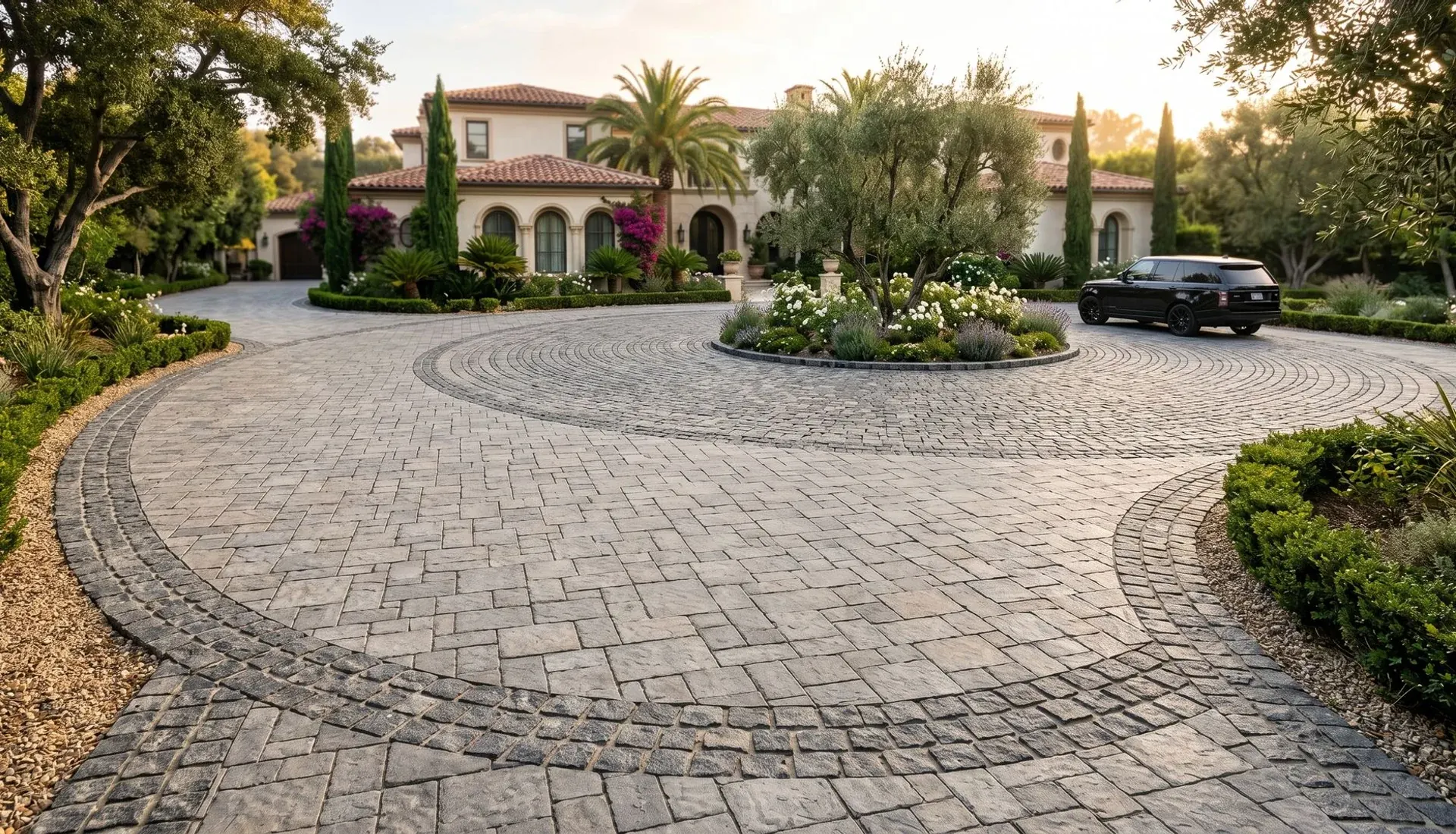
On this page
A thoughtful paver driveway border design can make a plain driveway look finished and intentional. It can also enhance curb appeal. A border frames the main paver field. It can add contrast, repeat a color from the house and guide the eye toward the entrance. It can also connect the driveway with nearby walkways, patios, walls and planting beds.
Paver border designs range from one quiet row to layered bands with decorative inlays. The right choice depends on your home, the driveway’s size and the look you want. A compact modern property may suit a single charcoal line. A larger traditional property may support a double border with a warm accent color.
This guide explores driveway border designs by style, color, material and layout. Use it to gather ideas, compare aesthetic options and narrow your choices during project planning. A beautiful border still needs the right preparation and construction. Decorative paving and structural edging are not always the same thing.
Top Paver Driveway Border Design Ideas
Start with the visual effect, not a product name. The same paver can look traditional in one layout and contemporary in another. These paver driveway border design ideas offer a useful starting point.
| Border style | Visual effect | Where it works well |
|---|---|---|
| Single soldier course | A crisp, pronounced frame | Medium and large driveways, modern layouts and herringbone fields |
| Single sailor course | A narrower, quieter line | Small driveways, walkways and simple transitions |
| Double border | More depth and a custom look | Wide driveways, estate entrances and large parking courts |
| Tone-on-tone border | Subtle definition with little contrast | Craftsman, ranch and relaxed landscape designs |
| Dark border with a light field | Strong contrast and clear edges | Modern, traditional and Mediterranean homes |
| Two-color border | A layered accent that repeats house colors | Homes with distinct trim, roofing or stone veneer |
| Decorative cross-banding | Breaks up a large field and marks transitions | Long driveways, aprons and garage thresholds |
| Central inlay or medallion | Creates a focal point | Parking courts and formal entrances |
| Contrasting entry apron | Makes the street entrance feel special | Long lots and properties with a clear front gate |
| Curved border | Softens the layout and follows landscaping | Sweeping driveways and organic garden designs |
Simple designs are often the easiest to read from the street. A single border can be enough. Add a second row, band or inlay only when it serves the overall composition.
What Paver Borders Do for a Driveway
The field is the main paved surface. The border runs along an edge or frames part of that field. Banding usually crosses the field or forms a distinct line within it. An inlay is a decorative shape or pattern set into the surface.
These elements can serve several design purposes:
- Frame the driveway. A border gives the field a clear beginning and end.
- Create visual interest. Contrast, texture and pattern keep a large surface from feeling flat.
- Define transitions. A band can mark the move from street to apron or from driveway to garage.
- Connect outdoor spaces. Matching accents can link the driveway with a walkway, patio or entry.
- Support the home’s style. The right course and color can reinforce modern, classic or rustic details.
- Improve proportion. Border width and layout can make the design feel balanced at full scale.
A border does not need to shout. Tone-on-tone paver driveway borders can be just as effective as bold ones. The goal is a cohesive hardscape, not a collection of competing features.
Start With the House, Not a Catalog
A border may look perfect in an online photo and wrong on your property. Begin with the colors and shapes that will remain around it.
Read the fixed colors
Look at the roof, stucco or siding, garage door, trim and front door. Note any brick, stone veneer, stone steps or concrete steps. These surfaces often provide the best accent colors. A charcoal border might repeat dark window frames. A terracotta ribbon might echo a tile roof.
Decide which color should lead. The house should remain the main focus. The driveway can support it without matching every surface exactly.
Study the architecture
Straight lines and smooth textures often suit a modern house. Tumbled cobblestones may suit a rustic or traditional property. A formal entry can support a symmetrical double border. A relaxed ranch home may call for a simpler frame.
Look beyond the building too. Retaining walls, a stone walkway and an existing patio can influence the design. A border can even repeat the cap color of a retaining wall. Low shrubs, grasses and succulents add their own colors and textures. The border should sit comfortably within this full landscape.
Test samples in real light
View full-size paver samples outside. Small screen images can hide color variation and surface texture. Place the field and border samples together near the garage. Review them in bright sun and shade.
If possible, check them at different times of day. Southern California light can make a pale blend look brighter at midday. Evening shade may soften the contrast. A dry-laid sample area also helps you judge the joint pattern and border scale.
Paver Border Styles and Laying Patterns
Border terminology can be confusing. Ask your contractor to mark the proposed layout on a plan or sample area. These basic patterns will help you compare the options.
Single soldier course for a crisp frame
In a soldier course, rectangular pavers sit with their long sides touching. Their length points into the field. This creates a row with more visual depth than a sailor course.
Use one soldier course when you want a clear, structured frame. It pairs well with a herringbone field. A dark soldier border can also sharpen a light running-bond layout. Consistent unit lengths help keep the line even.
Single sailor course for a narrower line
In a sailor course, the short sides of the pavers touch. The length of each unit follows the border line. This creates a shallower row.
Choose this approach when a soldier course would look too heavy. It can work well on a compact driveway or beside a narrow walkway. Mixed-length paver bundles may also offer more flexibility in this orientation. Confirm the layout with the product supplier and installer.
Double borders for depth and emphasis
A double border uses two rows or bands around the field. Both rows can use the same color. You can also pair a wide outer row with a narrow accent ribbon.
This style suits a large driveway that needs more than a fine outline. One color can match the field while the other repeats the home’s trim. That combination adds detail without introducing a third unrelated color.
Avoid using two wide, high-contrast rows on a small site. They can leave the main field looking cramped.
Running bond and herringbone field patterns
The field pattern changes how the border reads. Running bond creates long, staggered lines. A simple border can keep that linear look calm and orderly.
Herringbone creates more movement and texture. A quiet frame often works best beside it. You can match the border color to the field or use one contrasting course.
Basket-weave accents can add a traditional touch to an apron or inlay. Cobblestone patterns can create an Old World feel. Driveway use still depends on the paver shape, thickness and manufacturer’s guidance. A pattern that suits a patio is not automatically suitable for vehicles.
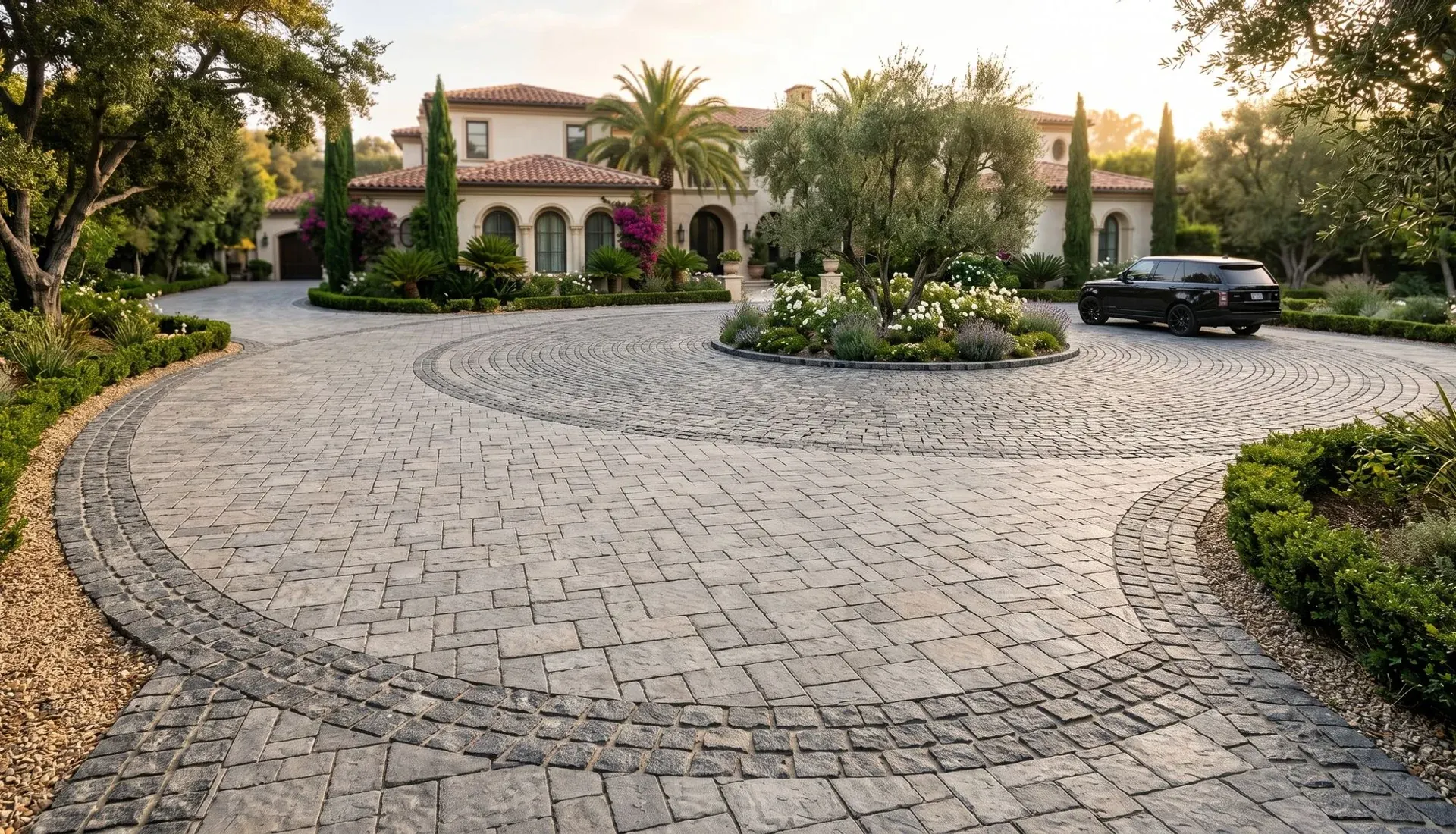
Contrasting Colors and Paver Border Combinations
Color creates the fastest visual change. It can also cause the biggest design regret. Choose the field first, then test the border against it.
Dark border with a light paver field
A charcoal or deep brown border makes a light field look crisp and defined. This combination suits many modern homes. It can also work with traditional architecture when the dark tone repeats the roof or window frames.
Keep the contrast controlled. A very dark double border may dominate a narrow driveway. One dark row and a quieter inner band may feel more balanced.
Tone-on-tone borders for subtle detail
A tone-on-tone design uses colors from the same family. A medium gray border around a light gray blend is one example. Tan on cream is another.
This approach adds sophistication without a hard outline. It works well when the field already has strong texture or a complex laying pattern. It can also soften a large driveway beside a detailed house.
Warm blends and terracotta accents
Warm beige, tan and brown pavers pair naturally with terracotta accents. Use this combination near Spanish or Mediterranean details. A brown outer course can ground the design while a thinner red-toned ribbon repeats the roof.
Do not add a red accent just because it appears in a catalog. It should relate to a real feature on the property.
Two-color borders that repeat the house
A two-color border can tie several fixed finishes together. For example, a charcoal outer row might match window frames. An inner brown row might match wood at the entry.
Use no more than two accent colors unless you have a clear design plan. Too many contrasting colors can make the border look busy.
| Paver field | Border option | Design effect |
|---|---|---|
| Light gray | Charcoal soldier course | Clean, modern contrast |
| Gray blend | Darker gray sailor course | Quiet, tone-on-tone definition |
| Warm beige | Deep brown double border | Warm, grounded and formal |
| Cream | Terracotta accent ribbon | A Mediterranean color connection |
| Tan blend | Charcoal outer row with tan inner row | Balanced contrast with a softer transition |
| Red-toned brick pavers | Deep charcoal single course | Strong traditional framing |
| Tumbled cobblestones | Matching blend with one dark band | Texture-led design with restrained detail |
| Pale sand blend | Slate-gray border | A light coastal-contemporary palette |
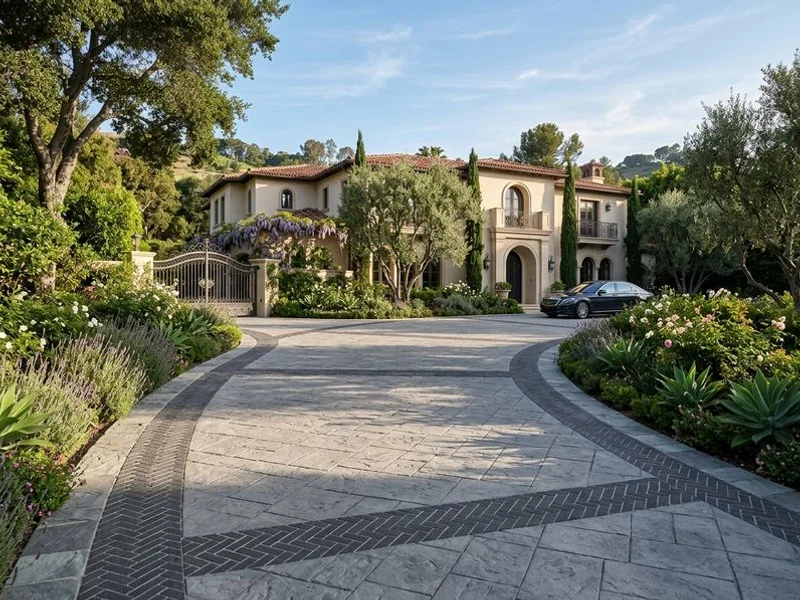
Choosing Border Materials, Texture and Scale
Color is only one part of material selection. Shape, finish and unit size affect the final look. They also change cutting and layout requirements.
Concrete pavers
Concrete block pavers offer many coordinated colors, sizes and textures. That makes it easier to match or contrast the field and border. Smooth units can create a tailored look. Tumbled units can add age and softness.
Ask whether each concrete paver or border product is rated for the same driveway use as the field. A matching color does not guarantee matching performance or durability.
Brick and clay-toned pavers
Brick tones and driveway-rated clay bricks can give a driveway a classic, established feel. A darker border can frame the red and brown blend. A matching sailor course can create a more restrained transition.
Confirm that the selected brick or paver is intended for vehicular applications. Wall veneer and thin decorative tiles belong to a different product category.
Natural stone and cobblestones
Natural stone can bring unique color variation and a premium texture. Granite cobblestones can suit a rustic border or a formal apron. Stone with strong variation may need a quieter field to avoid visual clutter.
Travertine and other natural stones vary in thickness and surface finish. Review surface tolerance and confirm the exact product’s driveway suitability. Natural materials can be less uniform than manufactured pavers. The installer should plan the layout and cuts around that variation.
Porcelain and large slabs
Porcelain and large slabs can create a sleek border or field. They also require extra care in product selection. A patio tile or thin overlay unit may not be approved for driveway traffic.
Check the manufacturer’s data and the complete pavement design. Do not choose a large format based only on its appearance.
Metal, plastic and timber edging
Metal or plastic products may form a structural edge restraint when they are designed and anchored for that purpose. Flat landscape edging around flowers is different. It is not a suitable substitute for driveway restraint.
Timber and railway sleepers may look rustic beside a garden. They are not a recommended structural edge restraint for interlocking concrete pavement. Wood can warp and rot. Keep that distinction clear when comparing decorative landscape ideas.
Existing concrete or asphalt edges
A paver border beside an existing concrete or asphalt driveway needs a transition review. Height, movement, drainage and the condition of the old surface all matter. Adding decorative pavers does not repair a failing base.
A stamped concrete apron can also influence the palette. Repeat one of its quieter colors rather than competing with its pattern.
Decorative Banding, Inlays and Entry Accents
Border design can go beyond the perimeter. Interior bands and accents help organize a large paved area.
Cross-bands for long driveways
A cross-band runs across the field. It can break a long driveway into visual sections. Use one near the street, a gate or the garage threshold when those transitions deserve emphasis.
Avoid adding bands at random intervals. Their placement should relate to the site plan. Too many lines can make the driveway feel shorter and busier.
Entry aprons and thresholds
A contrasting apron can create a welcoming entrance. You might frame it with a double border or use a different laying pattern inside it. A second band near the garage can complete the composition.
Keep the transition smooth and functional. Check drainage, utility covers and any change in elevation before finalizing the design.
Medallions and decorative inlays
A medallion or geometric inlay creates a focal point. It works best where drivers can see it without it disrupting the main turning path. A parking court often offers more room than a narrow drive.
Keep the shape proportional to the field. A detailed inlay can get lost on a very large site. It can also overwhelm a small one.
Ribbon accents and framed zones
A ribbon is a narrow line of contrasting pavers within the field. It can outline a parking zone or connect the border to an entry walk. Two matching ribbons can also frame a medallion.
Use this detail when it explains the layout. If it has no visual job, leave it out.
Border lighting and planting
Low-voltage lighting can highlight the entry and nearby plants. Place fixtures carefully so they do not weaken the paving edge or create a trip point. Electrical work should follow the site plan and local requirements.
A flower bed, low hedge or rock garden can soften the outside of the driveway. Keep soil, mulch and runoff from washing onto the pavers. Leave room for vehicle doors and routine maintenance.
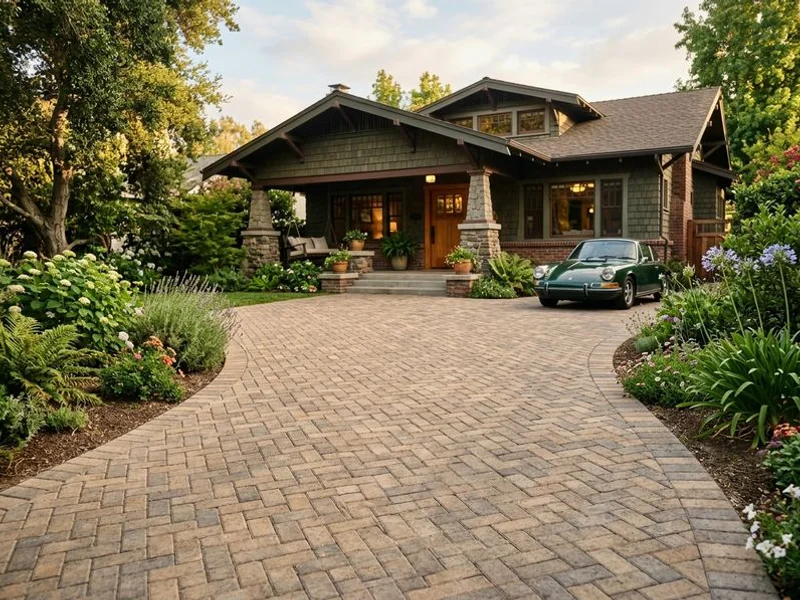
Paver Driveway Border Designs by Home Style
Use these combinations as inspiration rather than strict rules. Your fixed finishes and site proportions should guide the final choice.
| Home or property style | Field and border combination | Details to keep or avoid |
|---|---|---|
| Modern or contemporary | Smooth light-gray field with one charcoal soldier course | Keep lines clean; avoid ornate medallions and many colors |
| Spanish or Mediterranean | Warm beige field with a deep brown border and terracotta ribbon | Repeat roof tones; avoid unrelated cool-red accents |
| Craftsman | Earthy blend with a tone-on-tone sailor course | Favor texture and subtle detail over stark contrast |
| Ranch | Tan or gray field with one simple border and an entry band | Keep the long layout calm; avoid oversized inlays |
| Traditional | Red-toned or classic blend with a dark single border | Use symmetry where the entry is formal |
| Old World or rustic | Tumbled cobblestones with a matching border and narrow dark band | Let texture lead; avoid too many smooth modern accents |
| Coastal contemporary | Pale sand field with a slate-gray border | Use light colors and restrained contrast |
| Formal motor court | Structured field with a double border and central inlay | Balance the focal point with generous open space |
A custom look does not require every decorative feature. One well-chosen border often adds more elegance than several unrelated accents.
Choosing Border Width and Layout for Your Driveway
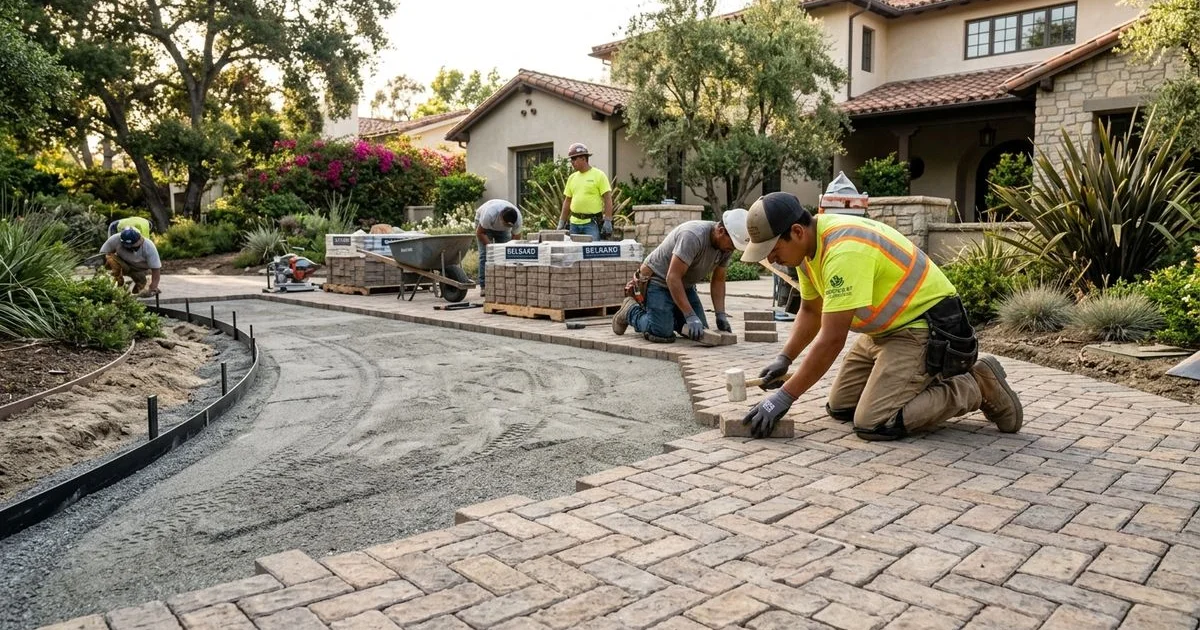
Border width should relate to the whole paved area. There is no single inch measurement that suits every property. The paver’s size and course orientation also change the visual weight.
Narrow or small driveways
Start with a single sailor course or a modest soldier course. A wide double border can take attention away from the field. Low contrast may help the design feel more open.
Keep inlays simple. One entry band may be enough.
Wide driveways and parking courts
A larger area can support a soldier course, double border or decorative band. You have more room to repeat two house colors. A central feature may also work if it does not interfere with parking and turning.
Lay out the design to scale before choosing it. A border that looks thin in a drawing may feel right on site.
Long driveways
Use cross-bands to mark meaningful transitions. The street entrance, a gate and the garage are logical locations. A continuous side border can tie those points together.
Do not add rows just to fill space. Long stretches of a simple field can give the eye a useful rest.
Curved layouts
Smaller units can make curves easier to follow with fewer conspicuous cuts. Either a sailor or a soldier border may work. The radius, paver shape and cutting plan will influence the result.
Review full-size samples along the curve. Check that narrow pieces do not create a fragile or jagged edge.
Sloped sites
Strong border lines can emphasize a slope. A quieter palette may feel more natural on a complex site. Drainage and surface flow should guide band placement from the start.
Do not place a decorative band where it would obstruct a drain or create an unwanted water barrier.
Decorative Border vs Structural Edge Restraint
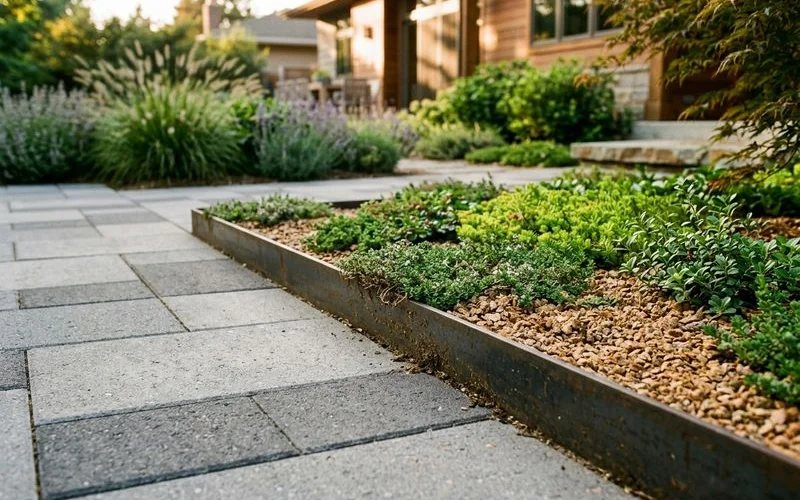
A decorative border is a visible design feature. An edge restraint is a structural part of the pavement. It helps hold the pavers together and resists spreading under traffic. The restraint may be visible, hidden or separate from the decorative row.
A row of contrasting pavers alone should not be assumed to provide that support. CMHA guidance describes several suitable restraint systems. These include concrete, cut stone and paver-specific plastic, aluminum or steel products. The right choice depends on the base and application.
Keep these construction points in the design review:
- Prepare and compact the paver base for the site and vehicles.
- Use a restraint designed for the pavement system.
- Maintain drainage and prevent runoff from undermining the edge.
- Plan cuts so they do not leave tiny slivers in tire areas.
- Check that field and border units are suitable for driveway use.
- Keep permeable pavers and their drainage details compatible with the border design.
CMHA guidance says cut pavers exposed to vehicular traffic should be no smaller than one-third of a whole paver. A whole-paver sailor or running course can sometimes improve the edge layout. Your installer should plan this before cutting begins. Good base preparation and drainage also help prevent erosion and protect the pavement edge.
Color and pattern do not determine load capacity. Product suitability and sound construction support longevity; decorative color alone does not. For help with paver thickness, base construction, soil and vehicle demands, read our guide to paver driveway load requirements.
A Practical Paver Border Design Checklist
Use this process to turn inspiration into a buildable design.
- Collect a small inspiration set. Choose three to five driveway images with a look you like. Note the border, not just the house.
- List the fixed finishes. Record roof, wall, trim, garage, entry and landscape colors.
- Select the field first. Choose its color, texture, size and laying pattern.
- Set the contrast level. Decide whether you want a bold frame, a soft transition or something between them.
- Compare two or three border styles. Test a sailor, soldier and double row where appropriate.
- Check scale on a site plan. Mark aprons, bands, curves, drains and any inlay.
- Dry-lay sample units. Review the field and border together in sun and shade.
- Confirm product suitability. Check driveway ratings, thickness, warranty and manufacturer guidance.
- Review construction details. Include the base, restraint, cuts, joints and drainage.
- Compare the full estimate. More rows, custom cutting and premium materials can affect labor and price.
This process can save time and reduce changes later. It also gives your contractor clear direction for the design.
Frequently Asked Questions
What is the best paver driveway border design?
The best paver driveway border design complements your home and fits the driveway’s scale. A single soldier course is a versatile starting point. Choose a sailor course for a finer line or a double border for a larger, more formal layout.
Should a driveway border be darker than the field pavers?
Not always. A darker border creates stronger contrast and a clearer frame. A lighter or tone-on-tone border can feel softer. Repeat a color from the house and test samples outside before deciding.
How wide should a driveway paver border be?
There is no universal width. Consider the paver dimensions, course orientation and size of the driveway. Small sites often suit one narrow row. Large sites may support a soldier course or double border. Review a full-scale layout.
What is the difference between paver borders and paver edging?
People often use these terms loosely. A border usually means the visible decorative course or band. Paver edging may mean that same row or a structural edge restraint. Ask for a section drawing so the function is clear.
Can I mix border materials, colors and textures?
Yes, if the products work together in color, height and performance. Limit the palette and confirm that every unit suits driveway use. Too many textures can make the design feel disconnected.
Do borders keep driveway pavers in place?
Not by appearance alone. A suitable structural edge restraint helps keep the pavement interlocked. A decorative row may be part of that detail, but it should not be presumed to replace it.
Can I add a paver border to an existing driveway?
Sometimes. An existing paver, concrete or asphalt driveway needs a condition and transition review. The installer must check heights, drainage, base support and how the new border will be restrained.
Does a decorative border increase cost?
It can. Extra material, labor, cutting and layout time may affect the estimate. Set a budget before comparing a simple border with a more detailed design. A border using the same product as the field may reduce complexity. Compare complete designs rather than price alone.
Conclusion
The most effective paver driveway border design is not the one with the most rows or colors. It is the one that frames the field, complements the house and fits the site. Start with a simple course. Add banding, an inlay or a second color only when it improves the composition. The beauty of the finished driveway comes from proportion and coordination, not excess.
Samples and a full-scale plan will help you compare the options. A sound design should also include the right base, drainage and structural edge restraint.
For homeowners in Pasadena and Greater Los Angeles, Ridgeline Outdoor Living can help coordinate color, pattern, materials and construction details. Contact us about custom paver driveway design and installation to plan a border that fits your home and your driveway.
Sources and References
- Concrete Masonry & Hardscapes Association, PAV-TEC-009 Guide Specification for Interlocking Concrete Pavement supports edge restraint types, vehicular paver selection, bedding and base construction relevant to driveway borders.
- Concrete Masonry & Hardscapes Association, Cleaning, Sealing and Joint Sand Stabilization of Interlocking Concrete Pavement, PAV-TEC-005 supports interlock, joint sand and edge behavior at driveway perimeters.
- ASTM C936, Standard Specification for Solid Concrete Interlocking Paving Units supports the distinction between driveway-rated concrete pavers and non-vehicular units.
A free on-site consultation, a phased budget tier, and a master plan that fits your property and your goals.