

Railroad Tie Retaining Walls: Lifespan, Problems and Replacement Considerations
Railroad tie retaining walls: how they age, realistic lifespan ranges, creosote considerations, signs of failure and how to plan a wall replacement.
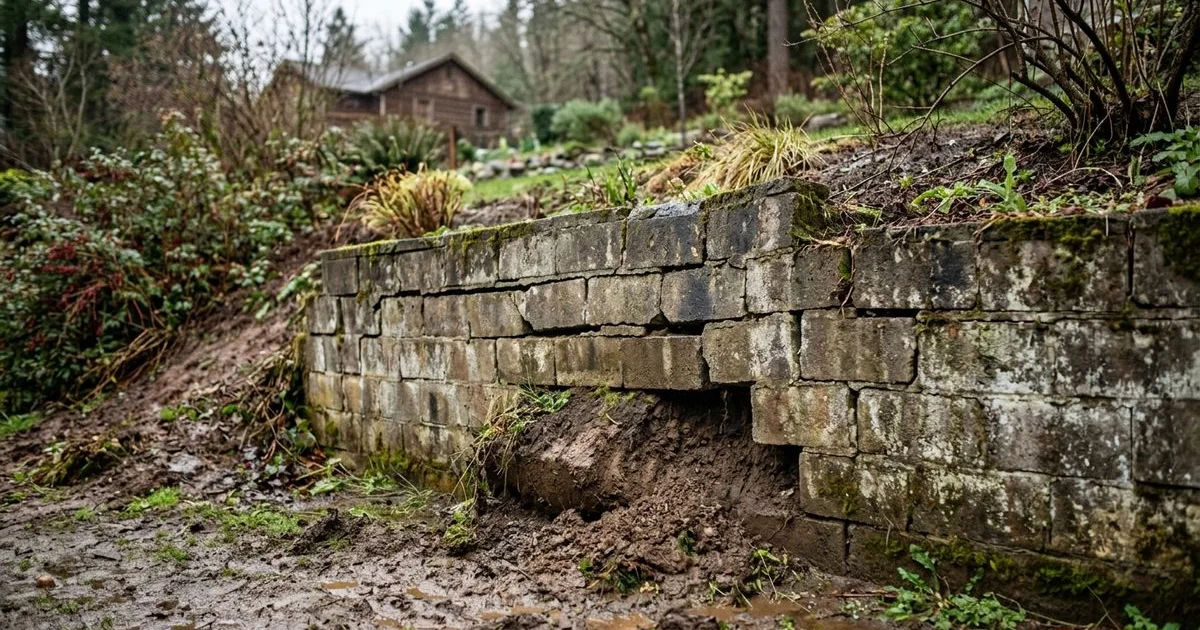
If you own an older home on a slope, there is a fair chance some part of the landscape is being held in place by railroad tie retaining walls. The dark, heavy timbers were widely used in residential landscaping from the 1960s through the 1990s, stacked along driveways, terracing backyards and edging garden levels. Decades later, many of those walls are still standing, and many are now showing the effects of age.
Understanding how these walls deteriorate, how long they can reasonably last, and what to consider when problems begin to appear helps homeowners plan ahead rather than wait for the wall to become an urgent issue.
What Railroad Tie Retaining Walls Are
The construction is simple to picture: heavy rectangular timbers, originally the creosote-treated wood ties used on rail tracks, stacked horizontally in courses and pinned together with long spikes or rebar, often with anchor timbers extending back into the soil for stability. The result is a rustic, informal wall that suits naturalistic gardens and modest grade changes.
Their popularity was mostly practical. Reclaimed ties were relatively inexpensive, widely available and straightforward to work with using basic tools, and the weathered look suited the relaxed residential landscapes of the era. That combination put them into many established neighborhoods and hillside properties, which is why homeowners still encounter them today.
How Railroad Tie Walls Age
Wood in direct contact with soil is constantly exposed to moisture, and that is one of the main reasons these walls deteriorate over time.
Rot is often the biggest problem. Ties tend to deteriorate fastest where they stay damp: at and just below the soil line, in buried courses, and along the back face pressed against wet backfill. Because the worst decay is often out of sight, a wall can still look acceptable from the front while hidden sections are softening behind it.
Splitting and checking are common as well. As ties weather, they develop cracks and splits along the grain. Small surface checks may be mostly cosmetic, but deeper splits can allow more moisture into the wood and speed up deterioration.
Connections can weaken too. The spikes and pins holding the courses together may corrode over time, and once fasteners lose their grip, individual ties can begin to shift. Gaps open between courses, soil may start washing through, and sections of the wall can lose the interlock that helped them behave as one structure.
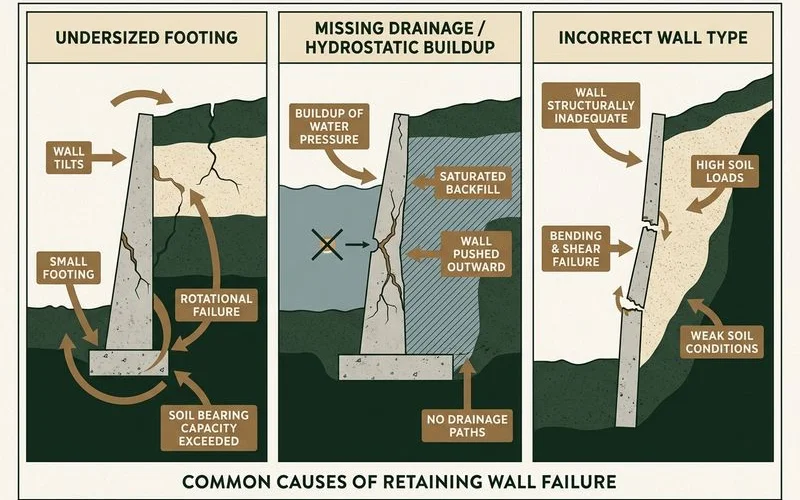
The visible result is movement: leaning, bulging, misaligned courses or sections that gradually shift after wet seasons. Poor drainage can accelerate all of these problems because water trapped behind the wall both keeps the timber wet and adds pressure against a structure that is already weakening.
How Long Do They Last?
There is no single lifespan for railroad tie retaining walls. A rough range often quoted for older landscape tie walls is around 15 to 30 years, but actual service life varies widely.
How long a wall lasts depends on the quality and treatment of the ties, drainage behind the wall, soil moisture, installation quality, climate, exposure and maintenance. A well-drained wall in a relatively dry setting may last considerably longer, while a wall exposed to constant moisture can deteriorate much sooner.
For walls installed decades ago, age alone does not tell the whole story, but it does make condition more important. Drainage is also one of the most important variables that can be addressed when evaluating an aging wall or planning its replacement.
Creosote and Treated-Timber Considerations
Many genuine railroad ties were treated with creosote or similar preservatives to help them resist decay.
That matters most when old ties are being cut, removed or disposed of. They should not be treated like ordinary untreated landscape lumber, and local disposal requirements may apply. Gloves and protective clothing are sensible during handling, and old ties should not be burned or casually reused without considering how they were treated.
For homeowners, the main point is practical rather than technical: replacing an old railroad tie wall may involve more careful removal and disposal than replacing a wall built from modern timber retaining walls.
Signs an Older Tie Wall Is Nearing Replacement
These are condition indicators, not a remote diagnosis, but they are the patterns that often show a wall is reaching the later part of its service life:
- Progressive leaning or bulging that becomes more noticeable over time
- Extensive rot, especially ties that are soft, crumbly or easily pierced
- Tie separation, with visible gaps opening between courses
- Failed connections, including corroded, loose or protruding spikes
- Soil washing through or settling behind the wall
- Persistent drainage problems, such as standing water or constantly wet soil at the wall
- Repeated localized repairs, where fixing one section is followed by problems in another
One of these issues on its own may not mean the entire wall needs replacement. Several appearing together usually suggest the problem is broader than a single damaged tie.
Planning a Replacement
When a tie wall reaches that point, replacement becomes a planning exercise.
Removal comes first, and with treated railroad ties that can include careful handling and proper disposal. While the wall is open, drainage behind it should be reassessed, because replacing the wall without correcting the water problem can shorten the life of whatever is installed next.
It is also a good time to reconsider the layout itself: whether the wall height still makes sense, whether one taller wall might be better handled as two lower terraces, and how the replacement should relate to the surrounding garden.
The replacement does not have to use the same material. Segmental block, poured concrete, natural stone retaining walls and modern treated lumber each suit different settings, and the right choice depends on the property’s style, the site conditions and the role the wall needs to perform.
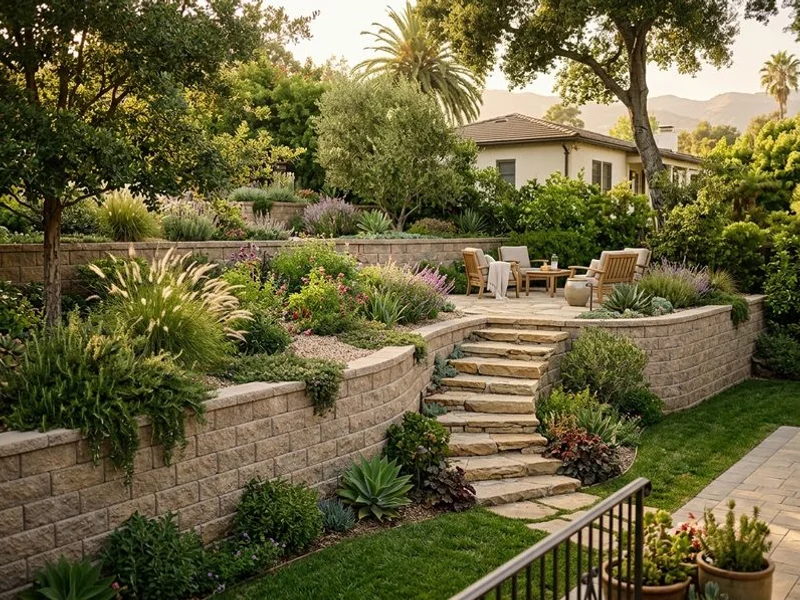
On the older hillside and estate properties common in Beverly Hills, these decisions often involve more than the wall alone. Legacy tie walls may sit within mature landscaping that took decades to establish, so replacement planning needs to consider how much of that existing character can be preserved. Thoughtful retaining wall replacement in Beverly Hills should protect the landscape while solving the structural and drainage problems that caused the old wall to decline.
Frequently Asked Questions
How long do railroad tie retaining walls last?
A rough range of around 15 to 30 years is often cited, but actual lifespan varies widely. Treatment quality, drainage, soil moisture, installation quality, climate and maintenance all affect how quickly the timbers deteriorate.
Why do railroad tie retaining walls fail?
Most failures involve some combination of moisture, aging timber and weakening connections. Water behind the wall speeds up rot and adds pressure, while corroded fasteners and softening ties reduce the wall’s ability to hold the soil in place.
Should an old railroad tie retaining wall be repaired or replaced?
It depends on how widespread the deterioration is. A single damaged tie in an otherwise sound wall may sometimes be repairable, but multiple soft or rotted ties, repeated movement, failing connections or recurring drainage problems usually point toward replacement rather than continued patching.
Are railroad ties still used for retaining walls?
They are much less common in new residential retaining-wall work than they once were. Modern projects are more likely to use treated landscape timbers or non-wood systems, while most current work involving railroad tie walls is repair or replacement of older installations.
Frequently Asked Questions
How long do railroad tie retaining walls last?
Why do railroad tie retaining walls fail?
Should an old railroad tie retaining wall be repaired or replaced?
Are railroad ties still used for retaining walls?
Have questions about a project of your own?
A free on-site consultation, a phased budget tier, and a master plan that fits your property and your goals.