

Paver Driveway Design Ideas: Patterns, Colors, Borders & Stone Styles
Paver driveway design ideas for every home: compare driveway paver patterns, stone colors, borders and layouts, and find driveway designs that fit your home and landscape.

Great paver driveway design ideas do two jobs at once: they give your home stronger curb appeal, and they give vehicles a surface built to last. The paver driveway designs below cover the patterns, colors, materials and layouts that work hardest in real driveway design, from classic brick to modern large-format concrete. Use these driveway design ideas and driveway paver ideas to narrow down what you like, then match the look to your home’s architecture and your property’s conditions.
How Do You Match Paver Driveway Design to Your Home’s Architecture?
The strongest driveway designs look inevitable. They feel as if the house and the paving were planned together, enhancing curb appeal without sacrificing function. Before choosing a pattern or color, identify the architectural style your paver driveway needs to complement.
Modern and Contemporary Driveway Designs
Modern homes pair best with large-format pavers, smooth finishes and a tight, monochrome palette. Charcoal, slate and cool gray pavers laid in clean stack bond or running bond lines echo the geometry of contemporary architecture. Keep joints narrow and borders minimal, and opt for a monochrome blend that stays timeless for years.

Traditional and Classic Styles
Colonial, craftsman and ranch homes suit warm, time-tested surfaces. Clay brick pavers in red and brown tones, laid in herringbone or basketweave, deliver a classic driveway design that ages gracefully. A contrasting soldier-course border frames the field neatly. The full-color clay units protect their elegance for decades, even under daily use.

Mediterranean and Spanish-Inspired Designs
Stucco walls, clay tile roofs and arched entries call for warm earth tones: tan, terracotta and sand-colored pavers with a tumbled texture. In Southern California, where Ridgeline Outdoor Living designs and builds driveways, this palette blends naturally with drought-tolerant landscaping and gravel accents. It is a friendly, inviting look that suits the local climate.

Rustic and Natural-Stone Appearances
For farmhouse, cottage and wooded properties, tumbled pavers and natural stone textures soften the driveway’s appearance. Irregular ashlar patterns and earthy blended color ranges imitate aged paving stones. They pair well with informal planting, garden walls and lush green space.

Minimalist Driveway Designs
A minimalist paver driveway design uses restraint: one color, one paver size, one direction. Smooth gray concrete pavers in a simple running bond, with flush edging instead of a raised border, keep the surface quiet. The effect is calm, linear and deliberate: every element has its place, and the architecture leads.

Which Driveway Paver Patterns Change the Whole Look?
The laying pattern is the single biggest visual decision in a paver driveway design. Patterns also behave differently under tires, so appearance and strength have to be weighed together.
Herringbone: Strongest Under Vehicles
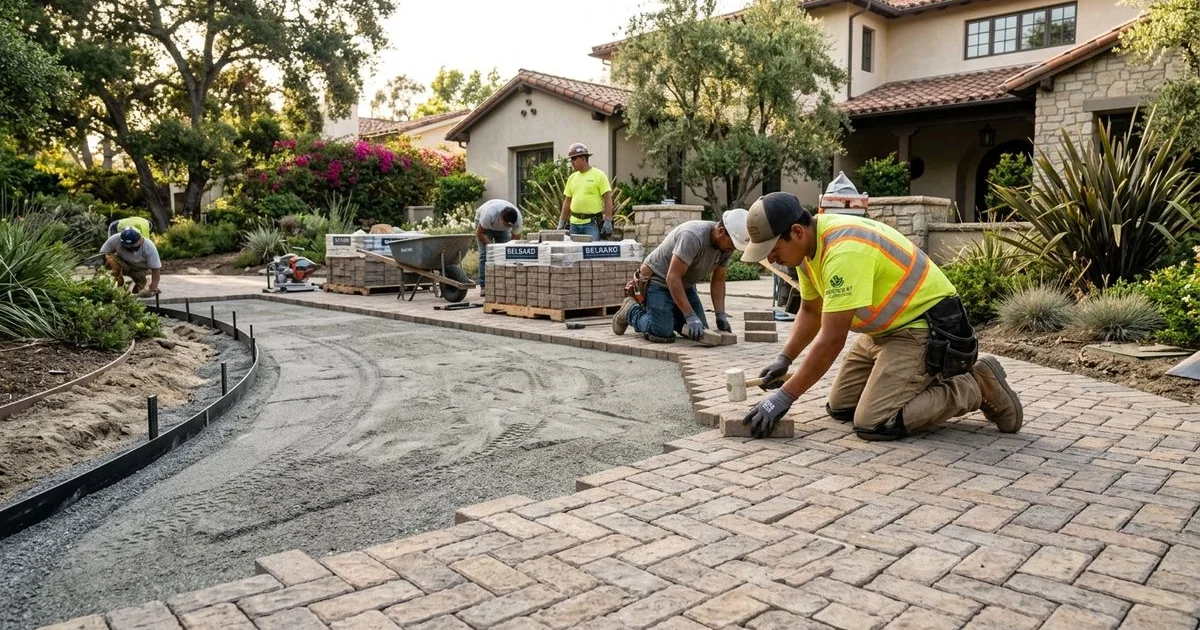
Herringbone locks each paver against its neighbors at an angle. That interlocking structure resists the shifting, rutting and movement that vehicle loads cause, so performance stays high for years. A 45-degree herringbone is the pattern we recommend most for driveway traffic; a 90-degree herringbone reads slightly calmer and aligns with the home’s lines. Either version suits both brick and concrete pavers.
Running Bond: Clean and Economical
Running bond offsets each course by half a paver, like subway tile. It installs quickly and wastes little material. The courses stretch a driveway visually, making compact spaces feel larger. Run the courses across the driveway to make a narrow lot feel wider, or lengthwise to pull the eye toward the garage.
Basketweave: Classic Texture
Basketweave pairs of pavers alternate direction, creating a woven, vintage surface that suits brick and traditional homes. It hides dust and tire marks well. It offers less interlock than herringbone under heavy vehicles, though, so it works best on standard residential driveways rather than sloped or heavy-use areas.
Stack Bond: Strictly Modern
Stack bond aligns every joint in a grid. The look is crisp and contemporary, but the aligned joints provide the least interlock. This pattern belongs only on driveways rated for it. Use pavers and base construction specified for vehicular use, and ask your installer to confirm the pattern is suitable with installed examples.
Ashlar and Mixed-Size Modular Patterns
Ashlar patterns combine three or more paver sizes in a repeating, seemingly random arrangement. The mixed scale breaks up large expanses, which flatters wide two-car driveways. The varied joints also disguise minor stains and debris, so maintenance stays easy.
Chevron and Decorative Accents
Chevron points courses toward a focal point, often the garage door or entry walk. Used across an entire driveway it can feel busy. We recommend reserving chevron, diamonds and similar inlays for aprons and accent panels, where they define entry zones and boost the sense of custom craft instead of acting as wallpaper.
A quick pattern picker by driveway design goal:
- Modern driveway designs: large-format pavers in stack bond or running bond, one monochrome color.
- Traditional driveway designs: brick pavers in herringbone or basketweave with a contrasting border.
- Rustic driveway ideas: tumbled pavers in a mixed-size ashlar pattern with blended earth tones.
- Narrow driveway layouts: running bond courses lengthwise in a single light paver color.
- Wide driveway designs: herringbone or ashlar at full scale, with banding to break up the paving.
- High-traffic paver driveways: 45-degree herringbone, the strongest interlock under vehicle loads.
Choosing Paver Materials: Stone, Brick and Concrete for Style and Strength
Material sets the tone of the whole design, and for driveways it also sets the load rating. Resistance to vehicle weight is the main consideration. A look you love in a patio catalog may not be rated for vehicle traffic, so confirm directly that any paver you choose is specified for driveway use. Choosing the right unit matters more here than anywhere else.
Concrete Pavers: The Flexible Workhorse
Concrete pavers are manufactured in a huge array of colors, shapes and finishes, from smooth modern slabs to convincing stamped-stone textures, at the most approachable price. Today’s concrete units anchor most driveway paving projects. Quality concrete driveway pavers are rated for vehicle loads and remain the default for most paver driveway designs, from classic rectangular holland-style units to smooth modern slabs. They make professional results attainable at a modest price.

Clay Brick: Color That Never Fades
Brick pavers carry color through the whole unit, so chips and wear barely show. These blocks keep their beauty and lasting color for generations. The palette runs red, brown, buff and charcoal, and the traditional aesthetic suits classic architecture. Brick costs more than concrete and offers fewer shapes, but its lifespan outlasts almost everything, often fifty years or more.
Natural Stone and Cobblestone-Inspired Designs
Granite, travertine and cobblestone-style pavers bring unmatched texture and a sense of permanence. Stone sits at the premium end of the budget, and some softer stones need sealing. In exchange, a stone driveway makes a statement that no poured surface matches, and pairing stone with a brick border adds real charm.

Large-Format and Permeable Options
Large-format pavers create the sleek, minimal surface modern designs demand; choose driveway-rated units, because oversized patio slabs can crack under point loads. Permeable systems look similar to standard units but shed stormwater and rain through open-graded joints, which helps prevent flooding on flat or level lots where drainage matters. Porcelain pavers, however, are usually patio products; use them on a driveway only if the specific product is rated for vehicles, with manufacturers offering driveway-rated lines in some collections.

Color Ideas: Contrast, Tone and Curb Appeal
Color drives curb appeal more than any other single choice. A few guidelines keep paver driveway design ideas coherent rather than chaotic:
- Match the roof before the walls. The roof is the largest fixed color on the property, so hold sample boards against your home’s exterior in daylight before committing; pavers in the same temperature, warm with warm or cool with cool, almost always harmonize.
- Gray and charcoal pavers read modern on any driveway design and hide tire marks, oil drips and dust better than light tones.
- Beige, tan and earth-tone pavers flatter stucco, brick and traditional driveway designs, and they stay visually cooler in strong sun.
- Two-tone paver driveway designs pair a field color with a darker or lighter border. Keep the contrast deliberate: one accent color, used consistently across the driveway design.
- Limit the palette. Field, border and accent should total two or three colors. Multiple accent colors in one driveway design read busy from the street.

Borders, Banding and Decorative Details
Borders are where paver driveway designs earn their polish. They create clean edges, protect the field, and give small details outsized impact. A soldier course, pavers stood on end along the edge, frames the field crisply; a sailor course, pavers laid flat and lengthwise, reads wider and softer. Either edging pattern can run in a contrasting color for definition.
Beyond the perimeter, consider:
- Decorative bands across the driveway design that break a long paver run into visual sections.
- Entry aprons in a different pattern or material where the driveway meets the street, creating a polished entryway.
- Inlays and medallions at the center of a circular driveway design or in front of the garage, used sparingly.
- Pattern transitions that shift from herringbone in the field to running bond in a parking bay, separating one zone from the next.

Driveway Layouts for Different Properties
Shape matters as much as surface, and many paver driveway design ideas succeed or fail at the layout stage. The right layout solves the property’s constraints while creating the look you want:
- Straight driveways suit small lots and modern homes. A straight path from street to garage, or road to garage, is easy to plan and easy to maintain, and borders and banding keep it from feeling plain.
- Curved driveways soften large front yards and work beautifully with rustic and Mediterranean styles, since curves slow and direct the flow of the eye while showcasing landscaping.
- Narrow driveways benefit from lengthwise running bond lines and a single light color, since dark tones can feel too heavy in a tight space. A ribbon layout, two paver strips with a grass or gravel center, cuts cost and adds green space.
- Wide two-car driveways accommodate two cars side by side and need pattern scale to match: mixed-size ashlar or herringbone reads better at width than small running bond.
- Circular driveways and horseshoe layouts create a gracious entrance and a natural focal point for an inlay, though they demand the most area and base material.

Connecting the Driveway to Walkways and Landscaping
A driveway never sits alone; it is usually the largest hardscape on the property. The most convincing paver driveway design ideas treat the front yard as one composition and tie new paving to existing walkways. The walkway to the front door repeats the driveway’s border color. Integrated planting beds soften the edges, and ground cover or gravel strips absorb the transition between pavement and lawn.
Keep planting practical. Low, tough plants near the driveway tolerate reflected heat and the occasional stray tire; anything thorny or sprawling belongs farther back. Where space allows, a planting island or a row of trees turns a wide expanse of paving into usable outdoor space rather than a parking strip. On urban lots, watch root growth near the base layers.
Lighting and Finishing Touches
Outdoor lighting extends paver driveway design ideas past sunset. Low recessed fixtures along the border, bollards at the entry, or uplights on a feature tree give the driveway silhouette and improve safety. When it comes to color temperature, choose warm light temperatures that flatter the paver color, and plan conduit before the base goes in, because retrofitting means lifting pavers. Good lighting makes the design inviting after dark, enhancing nighttime curb appeal while improving safety.

Practical Design Choices: Drainage, Texture and Maintenance
Beautiful driveway designs still have to work. A few important functional decisions belong in the design phase:
- Drainage. Every driveway needs a proper, gentle fall, roughly a quarter inch per foot, so water leaves the surface. On flat or compact sites, permeable pavers or a discreet channel drain, dry well or french drain can handle runoff without dominating the look, preventing puddles and soil erosion at the same time.
- Texture and traction. Smooth finishes suit modern driveway designs, but textured or tumbled paver surfaces grip better on slopes and in wet, icy or otherwise harsh climates.
- Maintenance. Darker, blended paver colors hide stains between cleanings. Tighter joints and polymeric sand reduce weeds, and a quick sweep keeps the surface free of debris. Because individual pavers lift out, repairs stay invisible, a long-term appearance advantage no poured surface matches.
- Climate. In freeze-thaw regions and snow climates, choose pavers rated for it and avoid icing salt damage with paver-safe products. Routine care is simple either way. In hot climates like Southern California, lighter colors stay cooler underfoot and under tires.
Matching Design Choices to Your Budget
Design decisions move the budget more than most homeowners expect, and most paver driveway design ideas scale up or down gracefully. Simple patterns like running bond install fastest; herringbone and basketweave add labor; borders, inlays and curves add cutting time. Standard concrete pavers cost far less than natural stone, and a well-designed two-tone concrete driveway routinely outshines a poorly planned stone one. For that reason, a good contractor will show you where using simpler patterns saves money without risk, and where adding a border or installing an accent band is worth it. Plastic or metal edge restraints and proper base work are not the places to cut.
When designing a paver driveway to a budget, spend on structure first: base depth and compaction, drainage and edge restraints. Planning this way ensures the surface lasts. Pattern and color upgrades can be scaled back without harm, but a beautiful surface over a weak base fails early. Our article on installation pricing breaks those cost layers down in detail if you want numbers alongside these design ideas.
Paver Driveway Design Ideas: Common Questions
What is the best paver pattern for a driveway?
Herringbone, especially at 45 degrees, provides the strongest interlock under vehicle loads, which is why we recommend it for most driveways. It is a durable, proven system for interlocking pavers under daily traffic, and the benefits go beyond strength: spot repairs stay simple. Running bond and basketweave are excellent for standard residential traffic, while stack bond needs driveway-rated construction beneath it.
What are the most popular paver driveway design ideas right now?
The most requested paver driveway design ideas in recent seasons cover four looks: large-format charcoal pavers on modern homes, classic red brick in herringbone on traditional homes, two-tone designs with a contrasting border, and permeable driveways on lots where drainage is a concern.
Can I mix different paver patterns in one driveway design?
Yes. Not only is it possible, the results are often better for it. Keep the field in one pattern and use a second pattern deliberately. Good examples include a chevron apron at the street, a running bond parking bay beside a herringbone field, or a basketweave accent panel. Limit yourself to two patterns plus a border so the design stays coherent.
What color pavers hide dirt best on a driveway?
Mid-tone blends hide the most: warm grays, tans and charcoal blends disguise dust, tire marks and minor stains far better than very light or very dark solid colors. A color-blended paver with subtle variation between units stays attractive longest between cleanings.
Are large-format pavers strong enough for driveways?
Some are, and some are not. Large-format units intended for patios can crack under vehicle point loads. Choose pavers explicitly rated for driveway use, with the thickness and base construction to match, and confirm the rating with your installer before falling in love with a look.
How do I choose the right paver design for my home?
Start with architecture: match the paver style, color temperature and formality to the house. The goal is a unique driveway that fits your home, not just a copy of a neighbor’s. Then filter for practical needs, including slope, drainage, climate and vehicle weight. Professionals weigh the same considerations on every project, and each particular property adds its own related constraints. The paver driveway design ideas that survive both filters are the ones worth pricing.
Bringing Your Paver Driveway Design Together
The best driveway designs balance four things. The pattern must suit the traffic, the material must be rated for vehicles, and the colors must complement the home. Details like borders, lighting and landscaping make the surface feel designed rather than poured. Get those right and the driveway becomes a stylish, durable feature that can transform the front of your home, a sign that aesthetics and functionality were planned together. Take this brief to your contractor and perfect the details before the base goes in. Collect the paver driveway design ideas you love, note what they share, and you will have a clear brief for your project. One of the easiest ways to use this guide is to shortlist two or three looks before you price anything. Poured concrete and asphalt simply cannot offer that kind of design flexibility.
When you are ready to turn that brief into a built driveway, our team is glad to walk the property, talk through patterns and materials, and price the design properly. Learn more about our paver driveway design and installation services.
Sources
This is a design-guidance article; it makes no pricing claims. Its technical statements reflect standard industry practice for interlocking concrete pavement.
- Interlocking Concrete Pavement Institute (ICPI) — industry-standard basis for the pattern-load claims (45-degree herringbone as the strongest interlock under vehicle loads), base-depth and edge-restraint requirements, and the quarter-inch-per-foot drainage fall.
A free on-site consultation, a phased budget tier, and a master plan that fits your property and your goals.