

Retaining Wall Maintenance: Inspection & Care Guide
Retaining wall maintenance made practical: learn to inspect your wall, keep drainage working, spot early warning signs and know when to call a professional.

A well-built retaining wall is one of the lowest-maintenance structures on a property: no moving parts, no finish to refinish, no service schedule. But low-maintenance is not no-maintenance, and the walls that reach old age in good condition are usually the ones someone glances at a few times a year.
Retaining wall maintenance is mostly monitoring. You are watching five things: water, movement, erosion, vegetation and drainage. What they reward is consistency, because the goal is not to find perfection but to notice change early, while the response is still small and inexpensive.
What Wall Maintenance Actually Involves
It helps to split the idea in two, because the two halves are very different jobs.
Routine homeowner maintenance is observation plus light upkeep: walking the wall a few times a year, clearing leaves and soil away from drainage openings, watching where runoff goes in a storm, managing vegetation that crowds the face, cleaning minor staining, and watching for anything that looks different from last season. None of this requires a contractor, and none of it involves taking the wall apart.
Professional repair is the other half: correcting structural movement, significant cracking, failed drainage, reconstruction of wall sections, anything involving engineering. Those are not maintenance tasks, and attempting them as weekend projects usually makes the eventual repair larger.
The right split depends on what your wall is made of; segmental block, poured concrete, masonry, timber and stone each age differently, and our overview of the types of retaining walls covers those systems. It also helps to know what went into the wall, since the backfill, drain pipe, base and grading you will be checking were set during retaining wall construction.
| What you notice | Monitor / maintain | Professional evaluation |
|---|---|---|
| Surface dirt, minor stable staining | Clean gently, recheck next season | Not usually needed |
| Blocked weep hole or drain outlet | Clear leaves, soil and debris | If it blocks repeatedly or water ponds anyway |
| Small, stable crack | Photograph, date, watch | If it widens, lengthens or multiplies |
| Localized erosion at ends or base | Reroute minor runoff, restore soil | If erosion exposes the base or keeps growing |
| Persistent wet areas or efflorescence | Note location, watch after storms | If staining spreads or wall shows movement |
| New lean, bow or bulge | Document immediately | Yes, promptly |
| Displaced blocks or caps | Keep people clear of the area | Yes |
How to Inspect a Retaining Wall
A retaining wall inspection takes ten to fifteen minutes and follows the same route every time; sameness is what makes change visible.
Start by standing back and sighting along the face from each end; a wall that was straight last year and has a belly in it this year announces itself from this angle. Then walk the length slowly, top to bottom, and work through a short checklist:
- New leaning, bowing or bulging anywhere along the face
- Cracks, or joints that have widened, offset or changed since you last looked
- Blocks, bricks or caps that have shifted, rotated or dropped
- Erosion at the base, at the ends, or in the soil just above the wall
- Soil or sediment washing out through joints or from behind the wall
- Areas that stay wet long after the surrounding ground dries
- New staining, white mineral deposits or rust marks
- Water emerging from unexpected places during or after rain, or weep holes that never run at all

Two habits make this checklist useful. Compare against your last look, not an ideal: a hairline crack unchanged for three years is a different observation from one that appeared last month. And take dated photographs of anything you decide to watch; a timestamped photo ends the annual argument about whether a crack is growing.
One boundary matters: visual checks tell you that something changed, not why or how safe the wall is. Stability cannot be diagnosed from a photograph or a ruler held against a crack. When a change looks structural, bring in professional eyes.
Check Drainage and Water Management
If you only maintain one thing, make it water. Most serious problems we see in existing walls around the Los Angeles foothills trace back to water going where it should not, and most of that is visible long before it becomes structural.
Keep visible weep holes clear of mulch, soil and leaf litter so water behind the wall can escape through the openings designed for it. Find any drain pipe outlets and confirm they are open; they get buried by landscaping or blocked by debris surprisingly often. During the first good rain of the season, watch where water actually goes: whether it ponds above or behind the wall, whether runoff from a slope, driveway or downspout concentrates toward it, and whether irrigation sprays the wall or leaks into the retained soil.
Grading at the wall deserves a look too: soil settles, mulch migrates, and a surface that used to shed water can quietly reverse over a few seasons. Concentrated flow is what carves channels and starts erosion, so the fix is usually redirecting the water, not rebuilding anything.
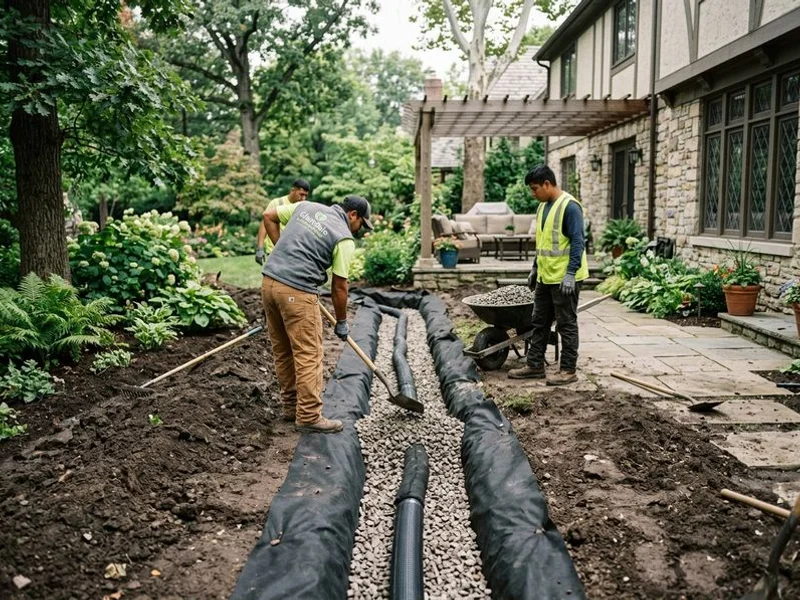
For the mechanics of how backfill, drain pipe and grading work together, our guide to retaining wall drainage covers the technical side; maintenance is simply keeping that system able to do its job.
Watch for Cracks, Leaning and Movement
Not every crack is a problem. Small, stable hairline cracks in concrete or mortar are common, often dating from the wall curing or settling early in its life, and may never change. The honest approach is to watch them, not panic over them.
There is no universal crack width that separates fine from serious, and any source that gives you one without knowing your wall is oversimplifying. What carries information is behavior: cracks that are new, cracks that are widening or lengthening between inspections, joints that are opening, blocks that are separating, a lean that is increasing, a bulge that was not there before. Movement that continues is a different category from a flaw that sits still.
If you suspect movement, photograph it from the same spot every few months; this is where the dated-photo habit pays for itself. If the comparison shows progression, stop monitoring and get an evaluation, because the question has shifted from maintenance to retaining wall repair.
Control Erosion, Soil and Runoff
Erosion around a wall rarely looks urgent, which is exactly why it gets ignored. Soil washing from the base or the ends, a channel that deepens a little every storm, a gap opening where the ground meets the wall: each is small, and each is quietly changing what the wall sits on and where its water goes.
Check the toe of the wall after heavy rain, the ends where the wall dies into the slope, and any bare soil above it. Look for settlement next to the structure, exposed base material, and places where runoff has started to prefer one path. In Southern California the pattern is familiar: months of dry weather leave soil hard and slow to absorb water, then the first winter storms deliver more than the ground can take, and the year’s damage can happen in a weekend.
The response to minor erosion is usually modest: restore the soil, protect the bare area, redirect the runoff that caused it. What erosion should not do is continue season after season; cumulative soil loss is one of the slower routes into the failure patterns covered in our article on why retaining walls fail.
Vegetation Around a Retaining Wall
Plants and walls mostly coexist fine; groundcovers above a wall even help by knitting soil and slowing runoff. The problems come from specific situations, not vegetation in general.
Weeds and volunteer seedlings that root in face joints are worth removing while they are small; left for years, expanding roots can widen gaps and nudge units out of alignment. Roots that find drainage openings can slowly constrict them. Dense shrubs planted hard against the wall hide the face and hold moisture against it, so keep a viewing gap; that is as much about inspection access as roots. And planting above the wall means irrigation above the wall, which adds to the water the drainage system has to handle.
On trees, be measured. Tree roots do not automatically destroy retaining walls, and plenty of mature trees sit near old walls with no conflict at all. Risk depends on species, distance, wall design and how the roots actually develop, so a large tree near a wall is a reason to watch the wall more carefully, not to remove either one by default.
Cleaning and Surface Care
Cleaning is the cosmetic end of maintenance, and it can stay simple. Dirt, cobwebs and light algae usually respond to a garden hose, a stiff brush and a mild detergent. If you use a pressure washer, treat it carefully: high pressure can erode mortar joints, strip finishes and force water where it should not go, so use low pressure and keep the wand moving.
White, powdery staining deserves a second thought before you scrub it. That deposit, called efflorescence, is mineral salt left behind by water moving through the masonry, which makes it evidence as much as eyesore. Cleaning it off is fine, but note where it was: staining that keeps returning in the same spot is telling you water travels through the wall there, and that is a drainage observation, not a cleaning one.
When to Inspect a Retaining Wall
There is no code-mandated inspection calendar for a backyard wall; any rigid schedule is guesswork. What works is a short list of trigger points tied to how walls actually get into trouble:
- A few times a year as part of ordinary property rounds, ideally once before the rainy season and once after it
- After unusually heavy or prolonged rainfall
- After any flooding, slope wash or erosion event near the wall
- After nearby excavation, trenching or regrading, even on a neighbor’s side of the fence
- Whenever irrigation patterns change: new planting, new zones, a repaired line
- Immediately, if you notice a new crack, shifted block or fresh staining
In the Los Angeles area, including on Pasadena hillside retaining walls, the before-and-after-rain checks matter most: the long dry season lets soil shrink and pull away, then winter storms test every weakness at once. Expansive clay soils, common across the region, swell as they take on water and shrink as they dry. That cycle is normal; what you are watching for is a wall that responds differently this year than last.
When Maintenance Becomes Retaining Wall Repair
The dividing line is structural change. Maintenance handles what is stable; repair addresses what is moving. Professional evaluation makes sense when you see an increasing lean or bow, cracks that keep widening, blocks or sections that have displaced or begun to separate, erosion that has undermined the base or keeps advancing, drainage problems that persist after outlets are cleared, settlement near the wall, or anything about a hillside wall that makes you unsure.
None of these automatically means rebuilding. Walls are often stabilized, drained or partially rebuilt at far less cost than replacement, and early evaluation usually preserves more of those options. What waiting does is narrow them. Our article on retaining wall repair explains how professionals assess movement and decide between repair and replacement.
Ridgeline Outdoor Living designs, builds and evaluates retaining wall and hillside systems across the Los Angeles area. Routine upkeep like the checks in this guide is yours to handle, and most walls will never need more than that. If your inspection turns up movement, drainage failure, significant cracking or erosion you cannot stay ahead of, that is where our work begins.
Frequently Asked Questions
How often should a retaining wall be inspected?
How do I know if my retaining wall needs repair?
Should retaining wall weep holes be cleaned?
How long does a retaining wall last?
Can vegetation damage a retaining wall?
Have questions about a project of your own?
A free on-site consultation, a phased budget tier, and a master plan that fits your property and your goals.